Conservation Internship
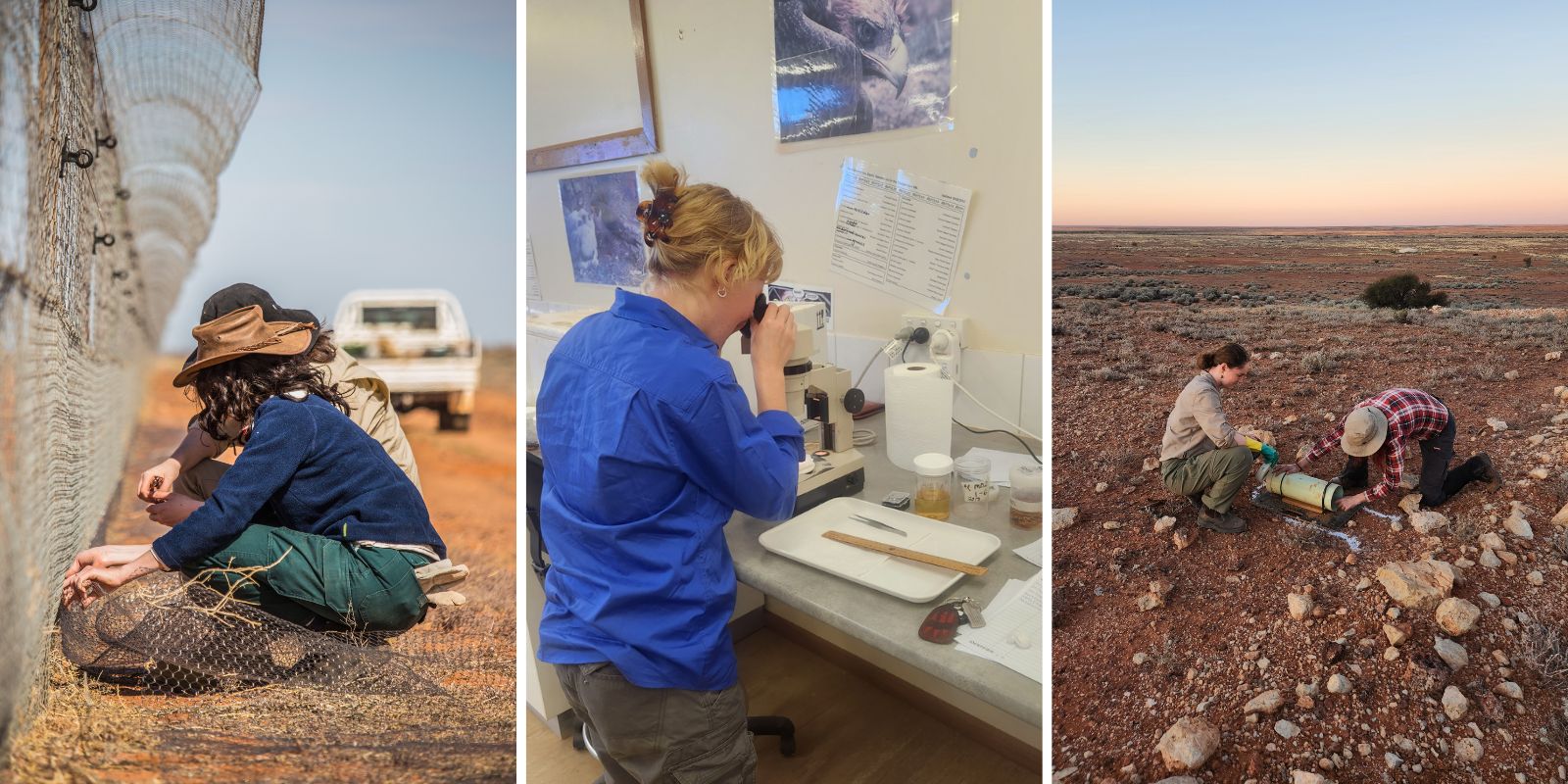
Launch your ecological career with a hands-on Conservation Internship with Arid Recovery
Arid Recovery offers 2 to 3 internships each year for recent graduates looking to deepen their practical experience in ecology and conservation. Working alongside an experienced multidisciplinary team, the intern will contribute to the delivery of ecological research and field surveys that support threatened-species recovery and arid land conservation. The role also offers exposure to land management, stakeholder and community engagement, and science communication within a small, innovative conservation NGO.
-
Location: Olympic Dam, South Australia
Applications are now closed for 2026
Tasks may include:
Collection and collation of ecological monitoring data (including vertebrate trapping and vegetation assessments)
Camera-trap and track-count surveys
Data management and reporting
Participation in land-management activities such as feral-animal control and reserve maintenance
Exposure to stakeholder and community engagement
Participation in research projects with Arid Recovery staff and collaborators
Community engagement through tours, events, and school visits
Housekeeping tasks essential for running a small NGO
Selection criteria:
A Bachelor degree in Science, Ecology Natural Resource Management, or Enivornmental Science
Experience in ecological and/or land management fieldwork
Experience with data entry and basic data management
Demonstrated ability to work independently and in a small team
Proactive and willing to take on unfamiliar tasks, seek guidance when needed
Physical fitness to undertake manual work outdoors in arid conditions
Willingness to live in a small, remote community for the duration of the placement
Eligible for living and working in Australia for at least 4 months
Strong written and verbal communication skills
Fluency in written and spoken English
&
Current driver's licence
Bringing your own car for travel to and from the office and, as well as for personal use during the internship, is highly recommended.
Accommodation and a living allowance will be provided, as well as contribution to your travel to and from Roxby Downs. Opportunities for paid casual work (tour guiding) may be available.
Past Interns
Matthew Rostron
Matt commenced a 3 month internship at Arid Recovery in October 2017. He had previously completed a Bachelor of Science, Ecology and Conservation Biology with a minor in wildlife management at Griffith University, Gold Coast. During his internship, Matt was involved in a wide range of activities, including wildlife surveying, community engagement and researching one-way gate placement and monitoring methods.
Madeleine Wilcox-Kerr
Maddy commenced a 3 month internship at Arid Recovery in September 2017. She had previously completed an Honours degree at the University of New South Wales, where she studied the trophic cascades that have resulted from historic dingo exclusion in parts of the arid zone. Whist at Arid Recovery, Maddy conducted a research project investigating the distribution of the threatened plains mouse throughout the Reserve.
Peta Zivec
Peta commenced a two month internship at Arid Recovery in July 2017. She had previously completed a Bachelor of Science (Hons), majoring in Ecology and Conservation Ecology at Griffith University. Peta has a very keen interest in botany and threw herself into Arid Recovery’s flora monitoring surveys. Her favourite experiences were feral cat chasing (for research purposes) and waking up every morning and seeing red sand. Since leaving Arid Recovery, Peta has started a PhD at the Australian Rivers Institute, Griffith University, examining if large-scale re-vegetation in agricultural areas can build more resilient landscapes under climate change.
Nathan Beerkens
Nathan commenced a 3 month internship at Arid Recovery in February 2017, which extended for another 2 months. He had previously completed a Bachelor of Science (Zoology and Conservation Biology) at the University of Western Australia and a BSc (Hons) at Murdoch University, where he studied the ecology and physiology of estuarine fish. During his internship, Nathan studied the suitability of the Reserve for kowaris, and created a translocation proposal for the species. Nathan remained at Arid Recovery in the role of Field Ecologist and Community Coordinator before going to Western Australia where he is the Senior Zoologist at Biota Environmental.
Emily Gregg
Emily commenced a 3 month internship at Arid Recovery in February 2017. She had previously completed a Bachelor of Science (Zoology) and Master of Science (Zoology) at the University of Melbourne, where she investigated the feasibility of using a waterless barrier to halt cane toad spread in Western Australia. During her internship, Emily researched the effectiveness of using one-way gates as a bettong management tool, and also analysed our social media impact. Emily is now undertaking a PhD with the Interdisciplinary Conservation (ICON) Science Group at RMIT. Her project aims to improve communications for threatened species conservation, with a focus on effectively engaging the public and decision-makers with so-called “non-charismatic” species (e.g. reptiles, rodents, insects and plants).