What over 700 animals tell us about a changing desert: 2026 pitfall recap
Arid Recovery
26 March 2026
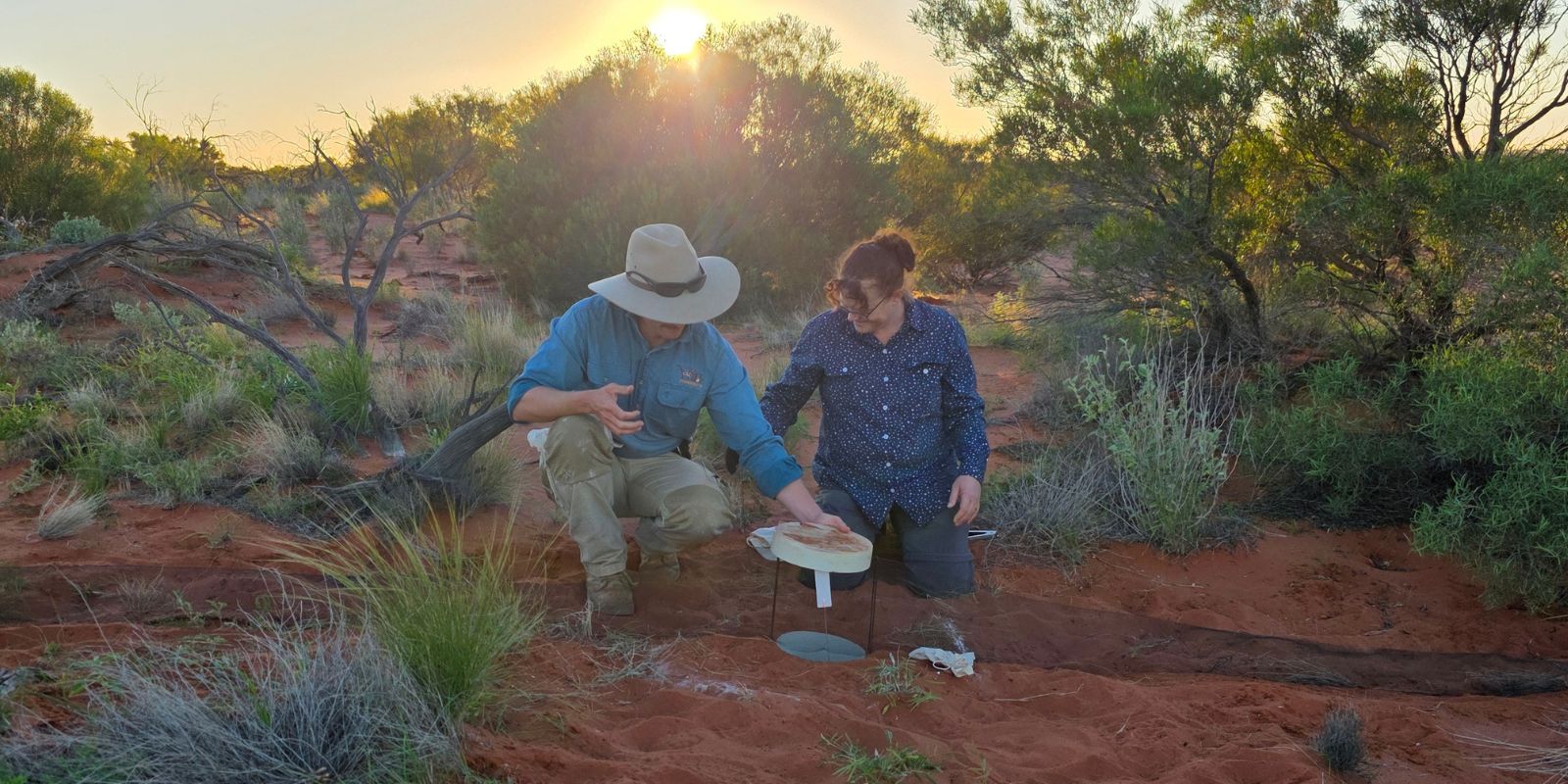
After heavy summer rains transformed the desert, our 28th annual pitfall trapping survey captured more than 700 animals across the reserve. From a surge in frogs, to fewer small mammals where predators are present, the results point to a system that is ever changing — with even hints of a new shift in the small mammal community
Some of the biggest rains in recent years hit the outback this February and March, with more than 135 mm falling across the reserve. The desert responded quickly. Temporary wetlands formed, frogs emerged from underground, and fresh growth covered the landscape.
In the middle of all this, we ran our 28th annual pitfall trapping survey. The survey was bookended by two separate >40 mm rain events, making it one of the most dynamic and unpredictable years we’ve experienced.
What is pitfall trapping?
Pitfall trapping is a simple but highly effective way of surveying small mammals, reptiles, invertebrates, and amphibians. Buckets are dug into the ground so they sit flush with the surface and are connected by low drift fences. As animals move through the landscape, they tend to follow these barriers, much like a mouse running along a wall, and eventually fall safely into a bucket.
Over four nights, traps are checked morning and evening. Animals are carefully collected, identified and measured before being released back where they were found. With 20 sites spread inside and outside the reserve, surveys like this rely on a large team of staff, researchers and volunteers working together across long days in the field.
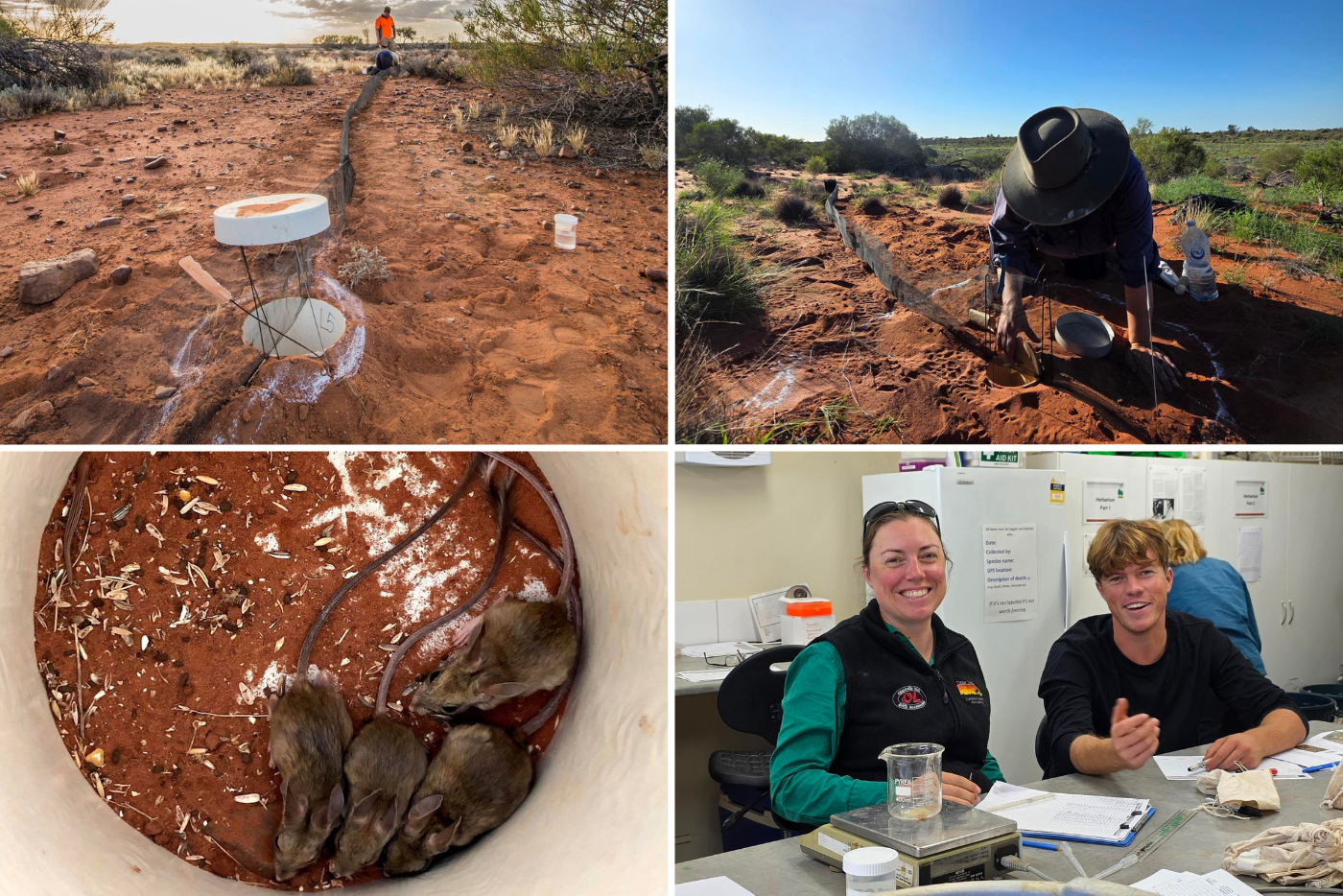
Pitfall lines with buckets flush with the ground and mesh fences in between (top left), checking the pits every morning and afternoon (top right), animals run along the fence and fall in the buckets (bottom left), and are collected and taken back to the lab to be measured (bottom right)This survey forms part of one of the longest-running pitfall trapping programs in Australia. That long-term perspective is what gives it real value. A recent paper published in 2025, based on this dataset, showed that ecological change in arid systems often happens slowly and continues to unfold over decades.
What we found in 2026
Across the survey, we recorded a total of 724 individual animals. Reptiles made up the bulk of captures, with 455 individuals recorded, followed by 153 mammals and 116 frogs. The majority of animals were captured inside the reserve, where long-term protection from feral predators and rabbits has reshaped the system.
Compared to previous years, reptile and mammal numbers were lower, which is something we are beginning to expect as predator populations, including western quolls and kowaris, become more established across the reserve.
Predators, prey, and a changing system
While lower captures might seem concerning at first glance, it is an expected and important part of rebuilding a functioning ecosystem.
Our data shows that where quolls are present, small mammal captures are consistently lower. In 2024, there were on average 52% fewer mammals per site recorded in areas with quolls compared to areas without them. In 2026, this difference was still evident, although less pronounced, with 28% fewer mammals per site where quolls were present.
Reptile and mammal captures were lower in both 2025 and 2026 compared to recent years. While temperature and rainfall play a significant role in reptile and mammal abundance, we may be starting to see the influence predation inside the reserve as native predators, western quolls and kowaris, become more established at Arid Recovery.
Boom time for frogs
One of the most noticeable responses to the rain was the surge in captures of desert trilling frogs (Neobatrachus sudellae). They appeared in large numbers following the rainfall, taking advantage of temporary water and favourable conditions.
Interestingly, they were more numerous outside the reserve than inside. We don’t know exactly why, but a possible explanation is predation by an unexpected cultprit.
Inside the reserve, native predators like bilbies are abundant, and frogs could be on the menu. If that’s the case, it may help explain why fewer frogs persist after rain events compared to areas outside the fence.
For now, it remains a hypothesis, but it highlights how restoring species can begin to rebuild the interactions that shape an ecosystem.
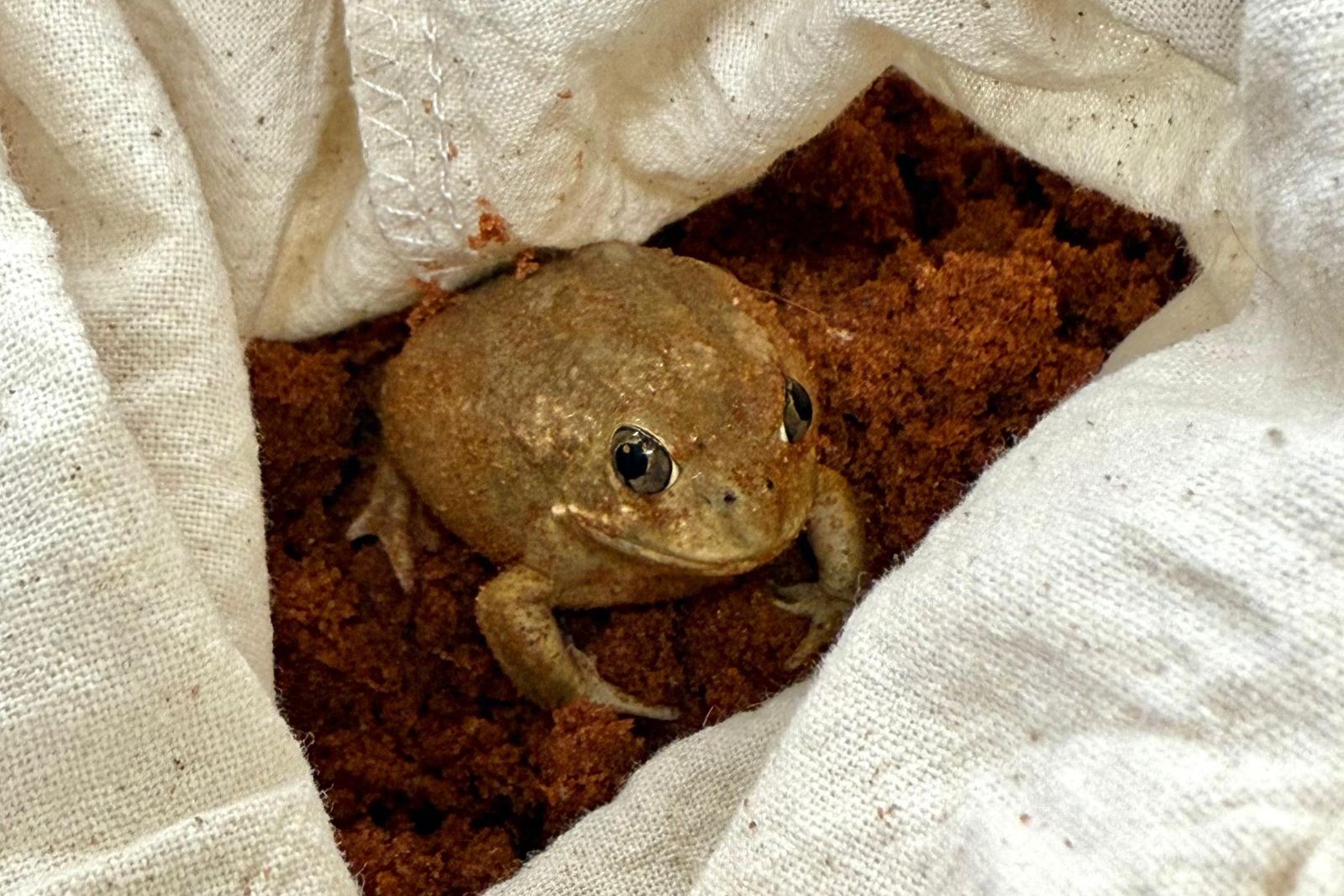
We put wet sand in the bags to keep Sudell's trilling frogs as happy as a frog in wet sand
The year of babies
One of the more noticeable features of this year’s survey was the number of juvenile animals captured. From small geckoes and young dragons to sub-adult hopping mice and even a juvenile sand goanna, there was a strong sense that many species had recently bred.
This likely reflects the conditions leading into the survey. After a very dry end to last year, the significant rainfall in February may have triggered a pulse in resources, allowing animals to breed and young to survive.
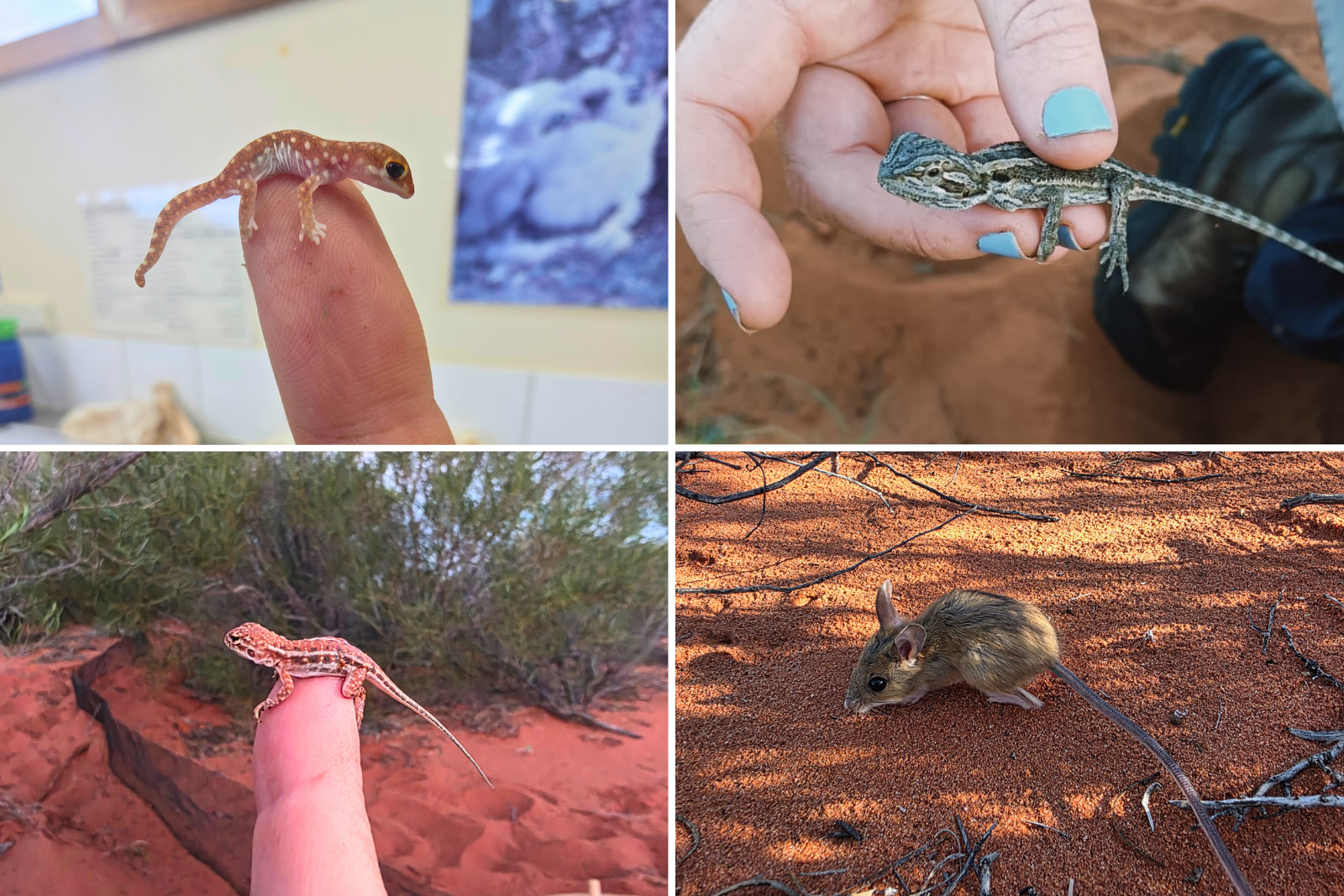 "I'm just a baby" — a juvenile beaked gecko (top left), a juvenile bearded dragon (top right), a juvenile kartiwarru dragon (bottom left), and a sub-adult spinifex hopping mouse (bottom right).
A new player in the system – the desert mouse
Previous research from this long-term dataset has shown that small mammal communities at the reserve are highly dynamic, and can have delayed or long-term successional response. Over the years, smaller mouse species have been replaced by larger, more dominant rodents such as spinifex hopping mice and plains mice. While it took time for these species to establish, they are now among the most common rodents at the reserve.
This year, we recorded three desert mice (Pseudomys desertor). That might not sound like much, but it adds to just six individuals recorded between 2021 and 2025. Before that, they were only detected sporadically, with records going back to 2011 and 2005.
While it is too early to say what this means, it does raise interesting questions: are we seeing the early stages of another shift in the small mammal community? Is a new species beginning to establish?
 Desert mice have a yellowish-orange eye ring. This one is being released after being measured in the lab.
Why it matters
We don’t really know what these ecosystems looked like before European settlement. What we do know is that they are not static. Over the past 29 years, this survey has shown that arid ecosystems are highly dynamic, shifting in response to rainfall, drought, and the return of species and interactions that have long been missing.
Some of these changes are obvious. Others take years, even decades, to emerge. That is why long-term monitoring is so important. It allows us to detect slow, subtle changes that would otherwise go unnoticed, and to better understand how ecosystems respond over time.
It is also what makes this one of the most valuable long-term ecological datasets in Australia. And it only exists because of the people behind it. A huge thank you to the volunteers who contributed their time and energy to this year’s survey. It takes long days, early mornings, and a lot of sand in boots to help build a clearer picture of how this desert system works.
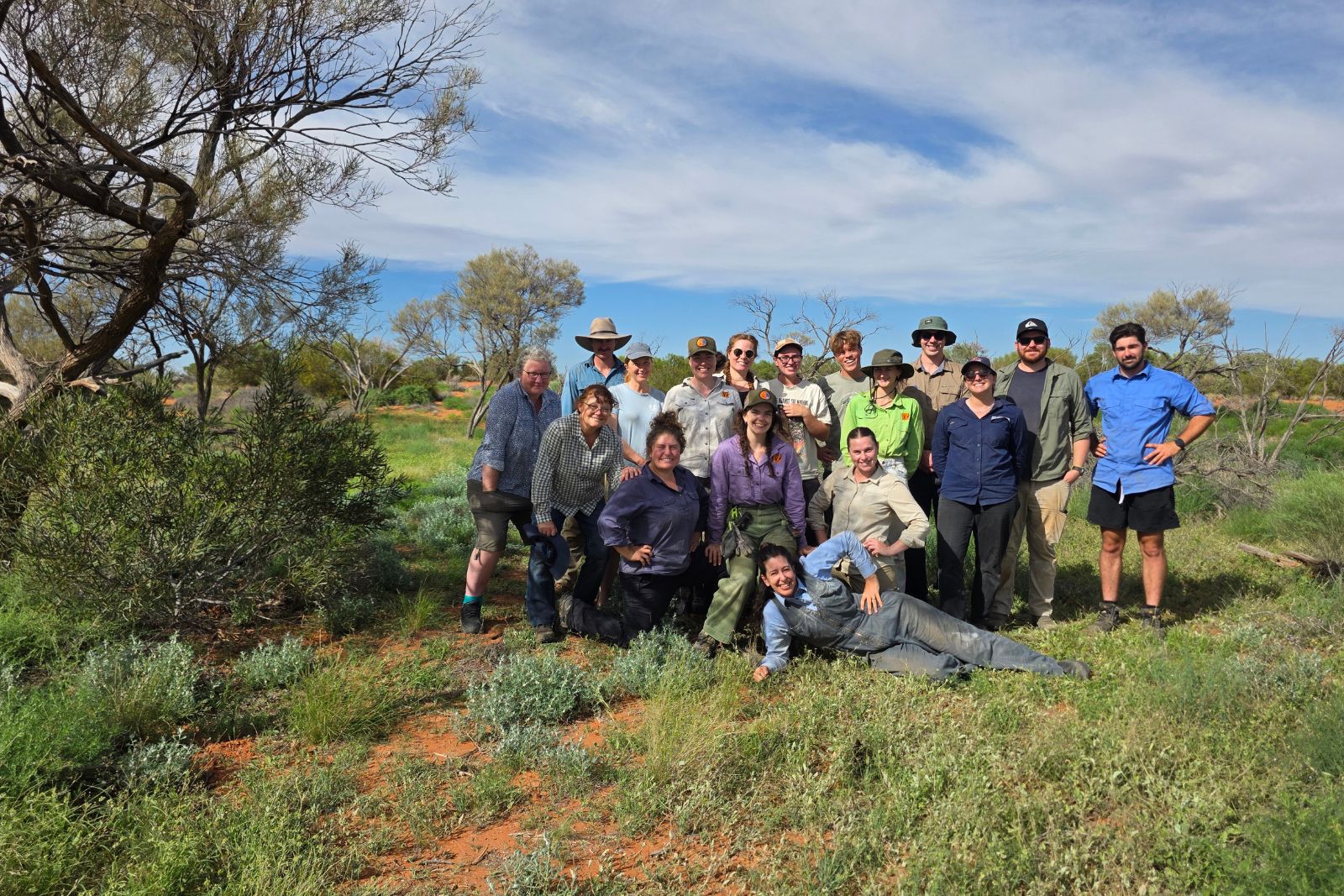 A big thank you to everyone involved, Audra, Mel, Dave, Katherine, Millie, Lauren, Shawn, Katie, Caitlin, Kiara, Bianca, Joly, Kate, Alex, Josh, Alana, Declan, and Hudson.