Seeing the hunt through a feral cat’s eyes: why mammals are most at risk
Arid Recovery
02 June 2026
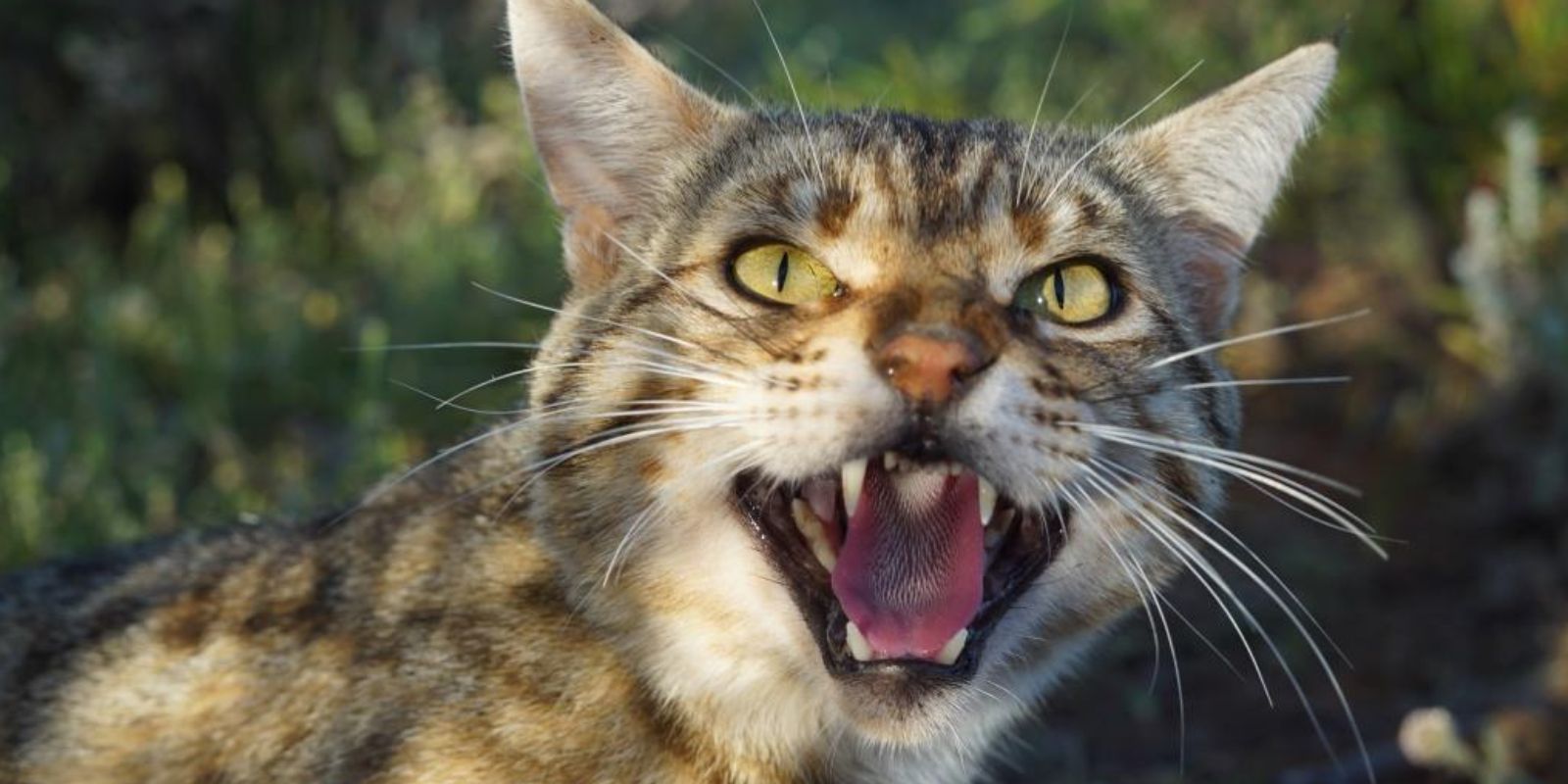
By fitting video collars to feral cats, Arid Recovery researchers discovered that cats detect small mammals from much greater distances than reptiles and insects. That seemingly simple difference may help explain why Australia has lost more mammal species than any other continent.
Feral cats have been implicated in the extinction of more than 22 Australian mammal species, and the decline of many more. But why are mammals hit so much harder than reptiles, birds, or insects?
New research from Arid Recovery has provided a rare cat’s-eye view of how feral cats hunt in the wild. By fitting 36 feral cats with video and tracking collars, researchers captured 188 hours of footage, offering a glimpse into their daily lives. The footage recorded 169 hunting attempts, with cats making a successful kill in 68 cases. The videos revealed that cats spent much of the day resting, with around 60% of their time asleep or stationary and most hunting activity occurring at night.
When cats were active, they averaged around 1.2 kills per hour. Scaled across a full 24-hour period, that equates to an estimated 12 animals killed per cat per day.
The footage showed cats targeting a wide range of prey, including:
Prey included:
-
24 small mammals
-
18 reptiles
-
21 insects
-
1 rabbit
Together, these findings highlight the efficiency of feral cats as hunters and underscore the significant pressure they can place on native wildlife populations.
Different prey, different hunts
The footage showed that cats do not hunt all prey in the same way, adjusting their strategy depending on the target.
Small mammals triggered the most deliberate hunts. Cats typically stalked them for longer, covered more ground, always pounced, and usually killed with a precise bite to the back of the neck. They were also more likely to carry mammal prey away from the kill site before eating it.
Reptile hunts were shorter and less consistent. Cats stalked reptiles in about a third of hunts, and often bit reptiles through the abdomen rather than the neck.
Insects were different again. Once detected, they were easy to catch. Cats rarely stalked or pounced on insects, and they were always killed and eaten on the spot. This suggests insects are easy to catch once detected, but are only hunted at very short distances, and likely play a secondary role in the cats' diet compared to mammals.
Despite these differences, most kills were over in seconds.
Cats rarely chased prey over long distances. The success of their hunting strategy depends on detecting prey early, and for mammals, they are exceptionally good at doing so.
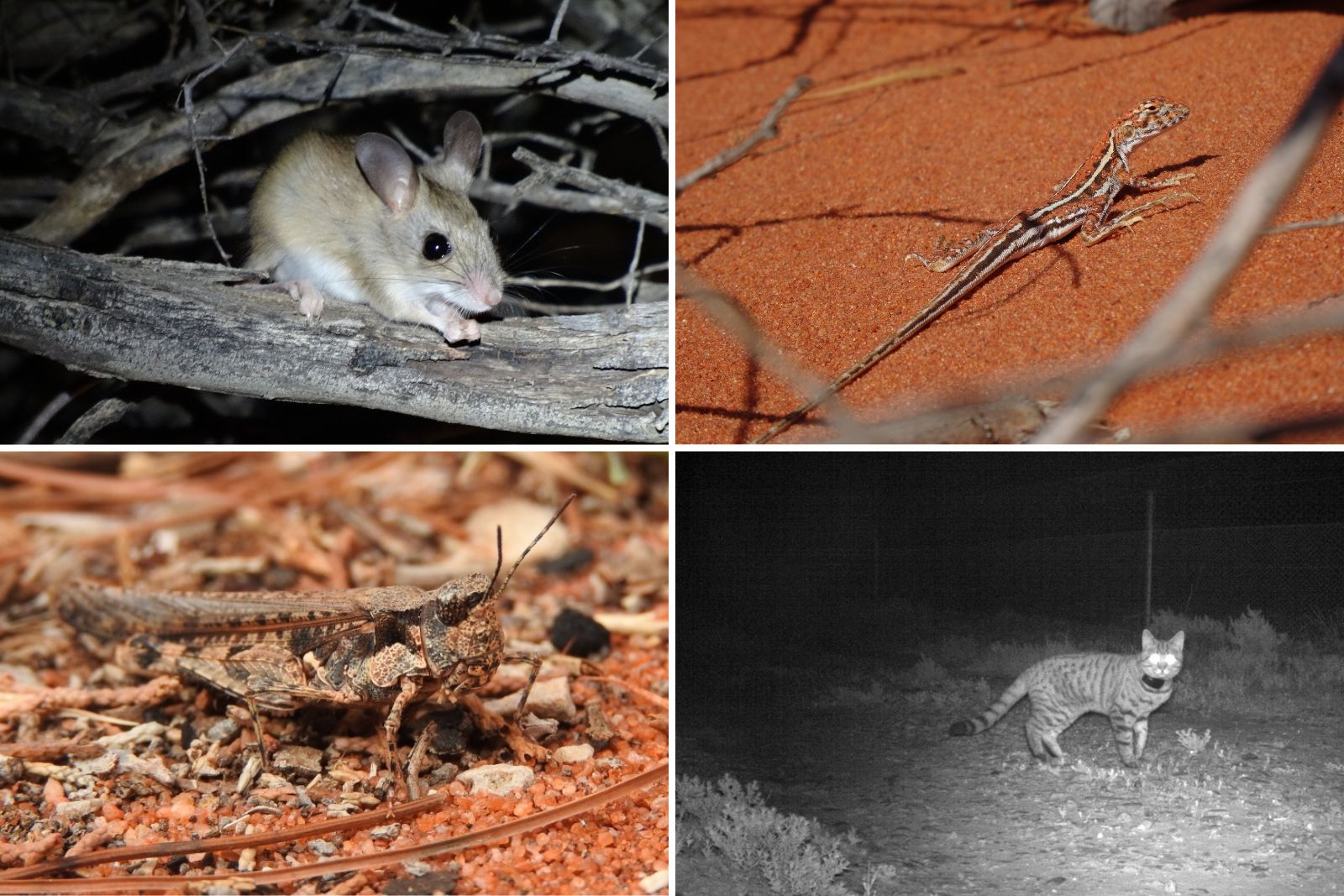 Cats adjusted their hunting strategy depending on the prey species
Mammals are detected from further away
The most important difference found during the study wasn’t in how cats kill, it was in how they detect their prey.
The study found that feral cats detect and begin hunting small mammals at significantly greater distances than reptiles and insects, even when the prey are the same size. For example, a 10-gram Bolam’s mouse might be detected from around nine metres away. A knob-tailed gecko of the same size might only be detected from three metres. That difference dramatically increases a cat’s “effective hunting zone.”
Over the course of a night, this means cats are likely encountering and initiating hunts on many more mammals than reptiles. Detection distance also increased with body size, meaning larger mammals could be spotted from even further away.
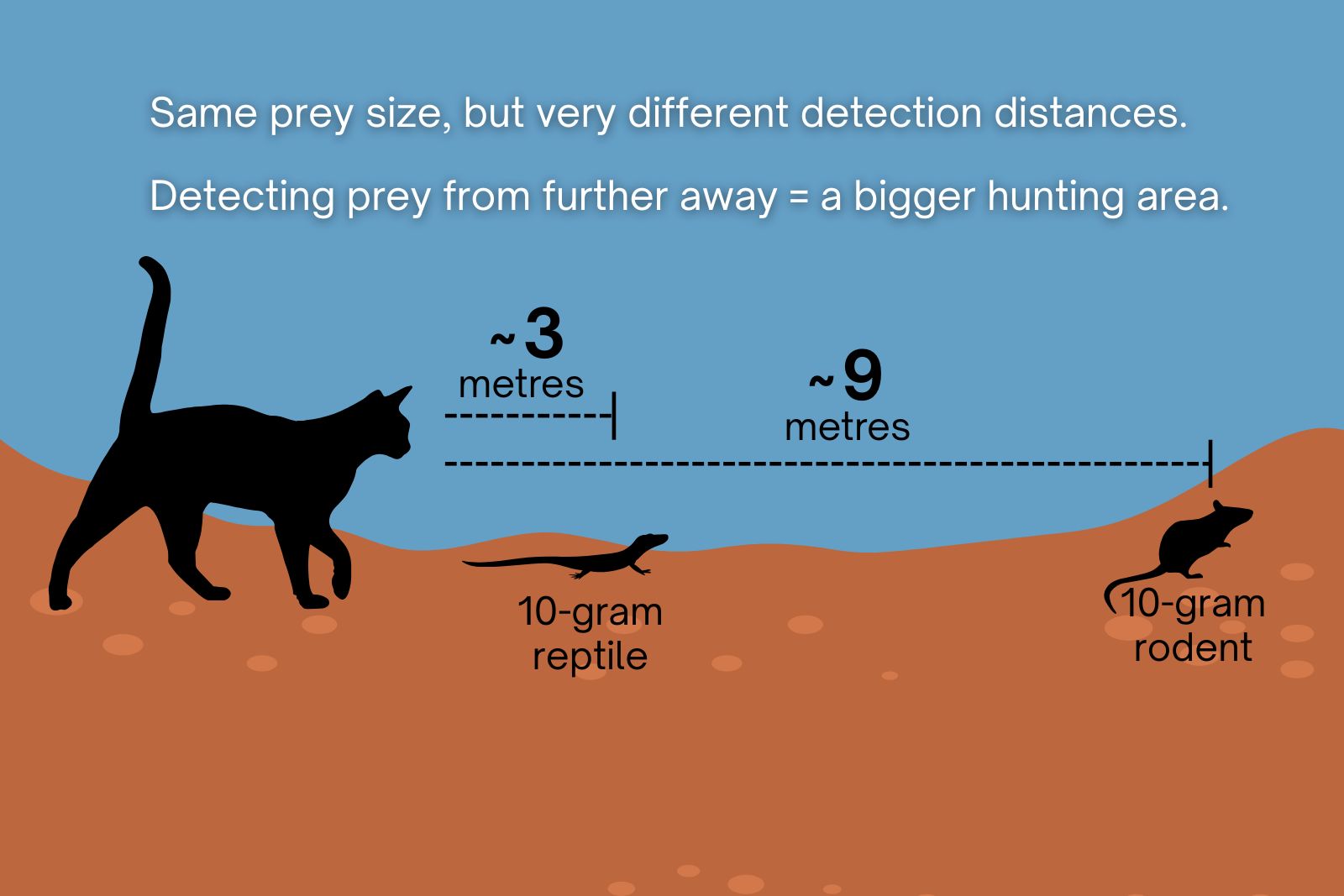
These findings help explain why Australian mammals, particularly those weighing between 35 grams and 5.5 kilograms have been disproportionately impacted by feral cats.
Small mammals are typically more mobile than reptiles, and produce more sound and movement. Many rodents emit ultrasonic vocalisation, and their higher metabolic rates means a greater level of activity that may create mores sensory cues for a stalking predator.
Mammals also provide more energy per gram than reptiles, potentially making them more “profitable” prey. Cats may be willing to initiate a hunt from further away if the reward is higher, further tipping the balance against native mammals.
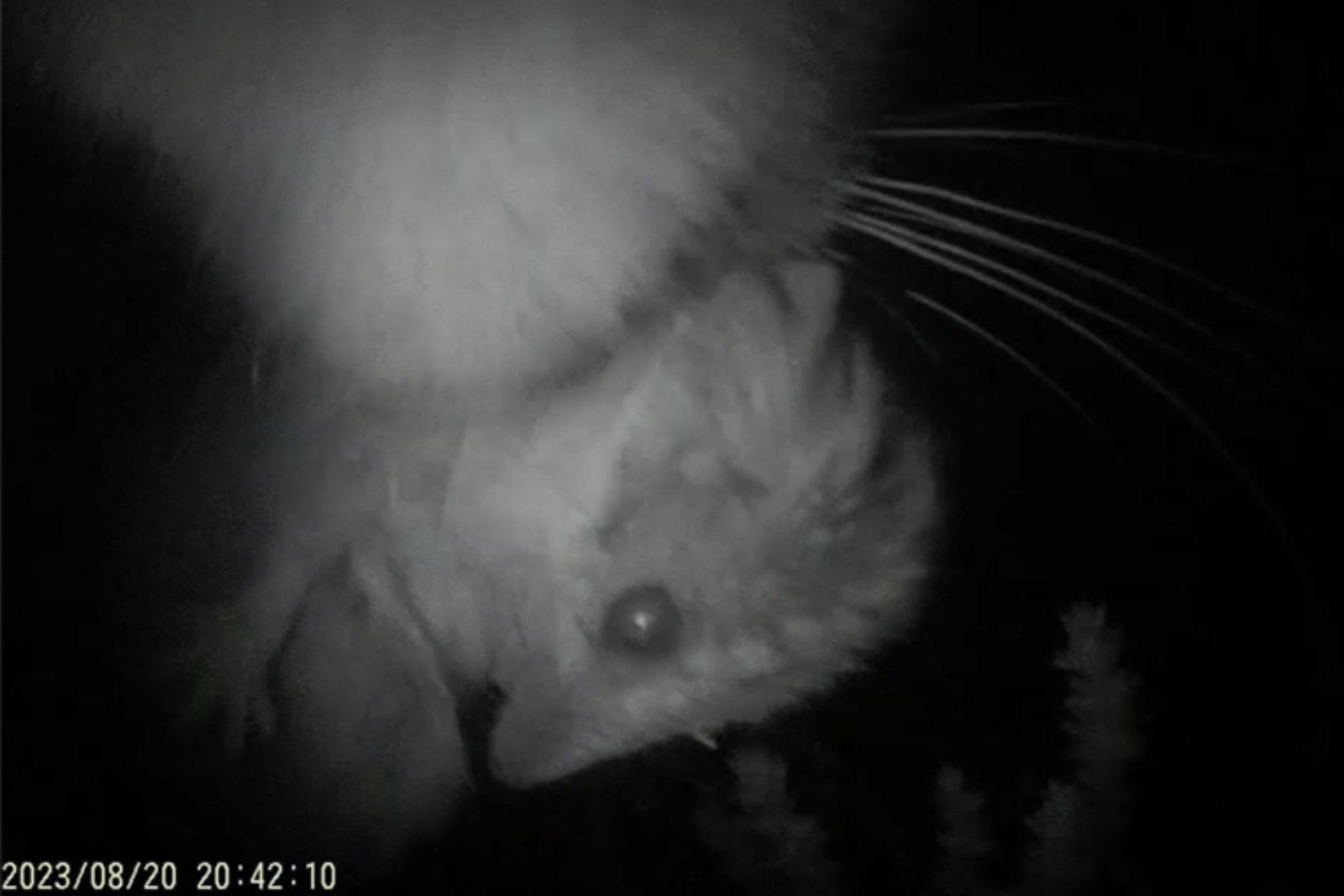
The video-collar footage shows a feral cat killing native small mammals.
What this means for managing feral cats and protecting threatened species
Australia has the worst mammal extinction record in the world and feral cats are a major driver of this loss. This research helps explain why. It shows that cats are not simply opportunistic predators, they are particularly effective at detecting and targeting mammals.
By uncovering how cats hunt, this work allows us to better predict which species are most imperilled and strengthens the case for effective, evidence-based feral predator management.
At Arid Recovery, this knowledge underpins everything we do; from maintaining our 123 km2 predator-proof fence to supporting broader, landscape-scale solutions beyond it. While fenced safe havens are critical, feral cats continue to exert immense pressure across Australia’s landscapes.
Research like this helps guide how we manage feral cats, but protecting native species ultimately depends on sustained, long-term feral cat control, both inside safe havens and beyond the fence.
You can play a role in that effort by supporting predator control, threatened species recovery and the research that makes effective conservation possible.
Read the full article "Feral cat video collars reveal differences in hunting behaviour between mammal, reptile and insect prey", published in Biological Conservation. Authors were, cat researcher and Arid Recovery alumni Hugh McGregor (UNSW, UTas, Nature Foundation), Chris Johnson (UTas), Sarah Legge (Threatened Species Recovery Hub), Dale Nimmo (Charles Sturt University), and Arid Recovery co-founder Katherine Moseby (UNSW).