From extreme heat to a green desert
Arid Recovery
25 March 2026
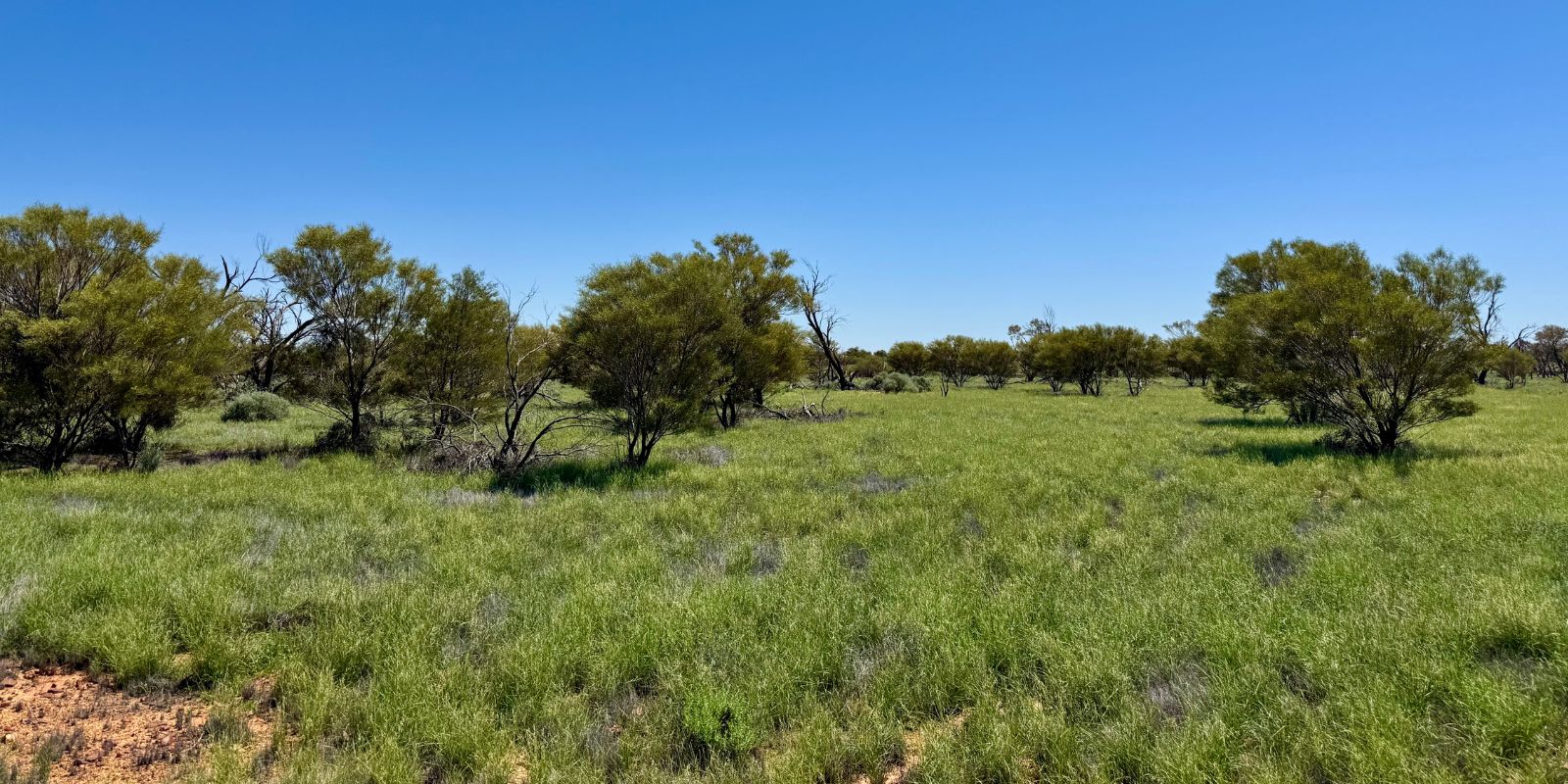
After a brutal January heatwave pushed temperatures to nearly 50°C, relief arrived in the form of heavy summer rains, transforming the Arid Recovery Reserve almost overnight. As frogs emerged from underground and shield shrimp hatched in temporary pools, staff were out on the fence line, battling mud and erosion to keep the predator-proof fence intact.
It’s been a dramatic start to the year at Arid Recovery, with extreme temperatures pushing humans, animals, and plants to their limits, then flipping the system on its head with downpours.
January delivered an intense heatwave, with nine consecutive days over 40°C. Two of those days peaked at a staggering 49.6°C and 49.4°C. The average temperature for the month sat at 40.4°C, (three degrees above the long-term average). It was relentless, even by outback standards.
Relief finally came on 6 February, when 20.5 mm of rain fell across the reserve. And then… it just kept coming. Another 59.9 mm followed, with a further 12.8 mm at the end of the month.
Through it all, CE Lauren Young and Land Management Officer Nathan Manders remained on-site for 10 days, monitoring the reserve. Their focus was the 80 kilometres of predator-proof fence that keeps feral animals out and threatened species safe. Checking for damage and erosion after the rain is essential, as saturated soils, runoff, and debris can weaken sections of the fence or undermine its base, increasing the risk of failure. Accessing the full fence line was no easy task, with sections only reachable through knee-deep mud and plenty of bogged vehicles along the way. Challenging conditions, but with the added reward of watching the landscape transform.
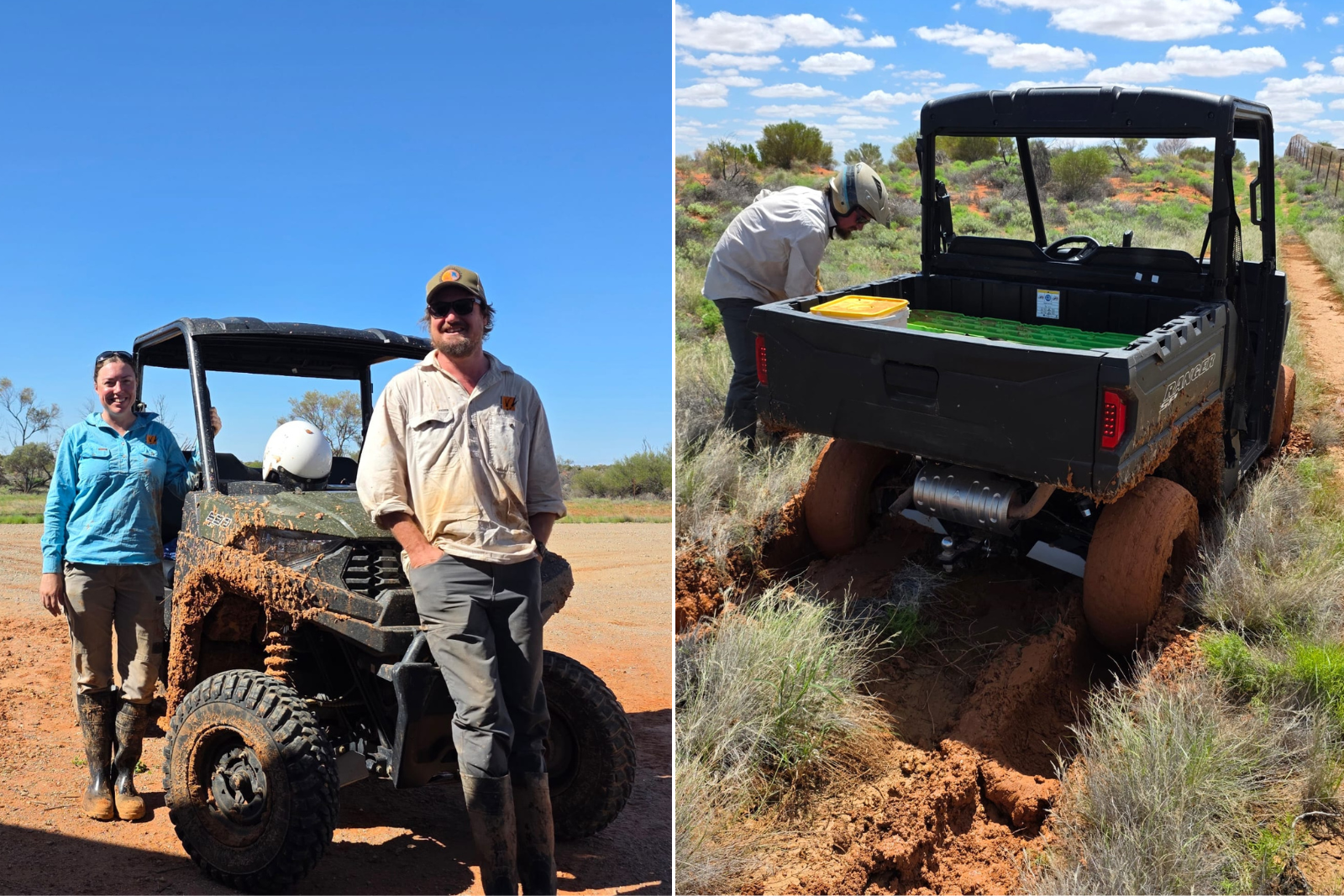
Chief Executive Lauren and Land Managment Officer Nathan rely on the Polaris to get around the reserve after the rain. Unfortunately, even the Polaris is no match for some parts of the muddy reserve. A short dry window gave us the chance to run our annual pitfall trapping, and the results reflected the changing conditions. Frogs were everywhere. Desert trilling frogs (Neobatrachus sudellae) take advantage of these boom periods, emerging from one metre underground after rain to feed, breed, and take full advantage of the brief window of abundance.
Volunteers were equally fascinated (and slightly horrified) by the appearance of shield shrimp (Triops australiensis); strange, ancient-looking crustaceans that seem more suited to the fossil record than a temporary desert puddle. These “gill-legged” creatures breathe through dozens of tiny legs, which they also use to swim and, in females, carry eggs. They begin life as larvae with a third “naupliar eye” that detects light, helping them navigate their watery world. Growing up to 7–8 cm long, they hatch, feed, reproduce, and disappear again all within days or weeks, their eggs lying dormant in the soil until the next big rain.
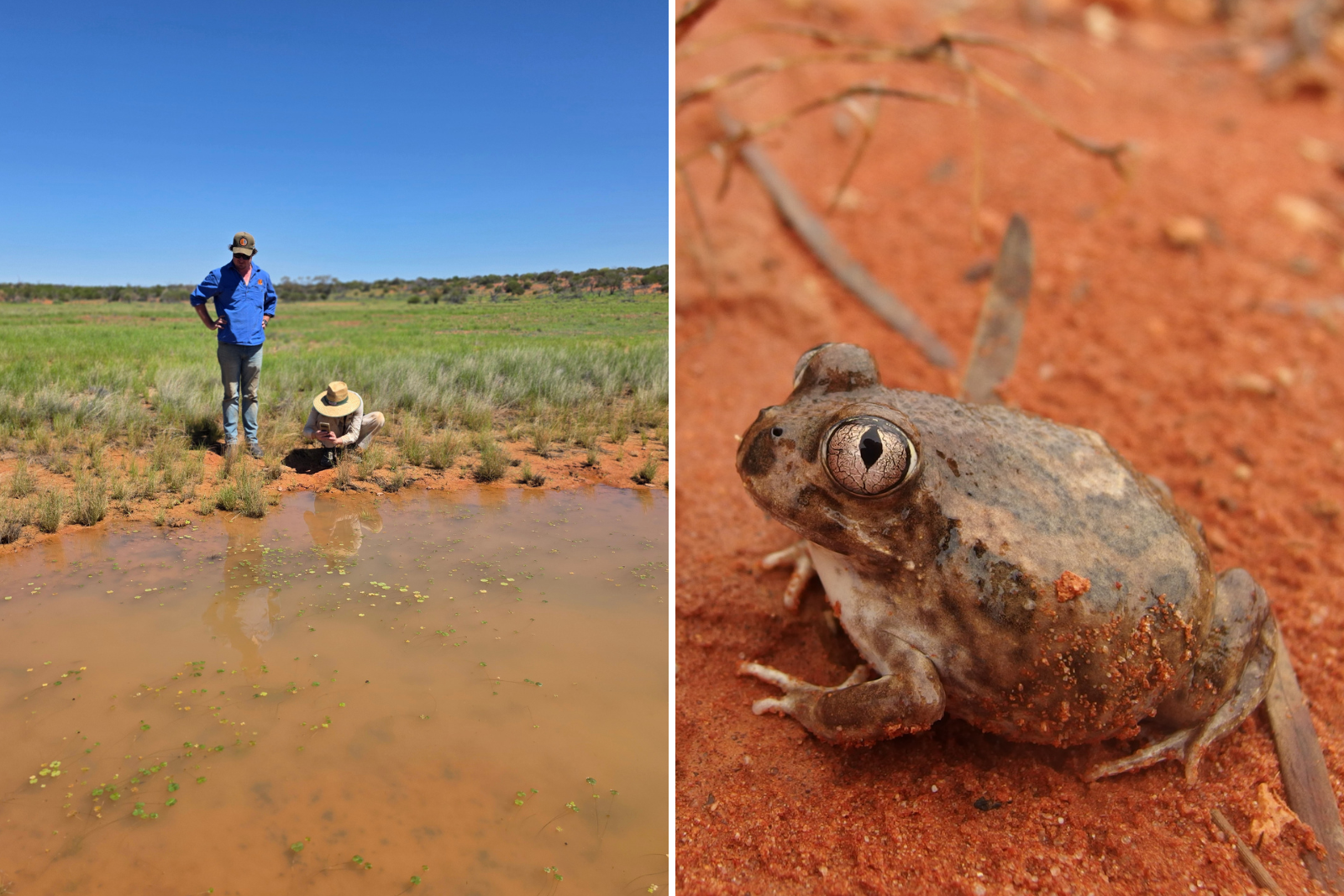
Land Managment Officer Nathan and Ecologist Caitlin checking out the tadpoles that have taken over a temporary pond (left), and a desert trilling frog (right).gif?lang=en-AU)
A shield shrimp moves through the evaporating water and ostracodsMore rain followed in mid-March, with 42.3 mm falling between the 15th and 17th. In a system that runs on less than 150 mm of rainfall a year, and often doesn’t even reach that, these totals are significant. Last year, the reserve received just 100 mm. This year, we’ve already recorded 135.5 mm.
And it shows.
The reserve has come to life. Where there was once red dust, there is now a flush of green. Annual plants and grasses have sprung up across the landscape, transforming the desert almost overnight. It looks as though someone has taken a paintbrush and swept green across the red sand.
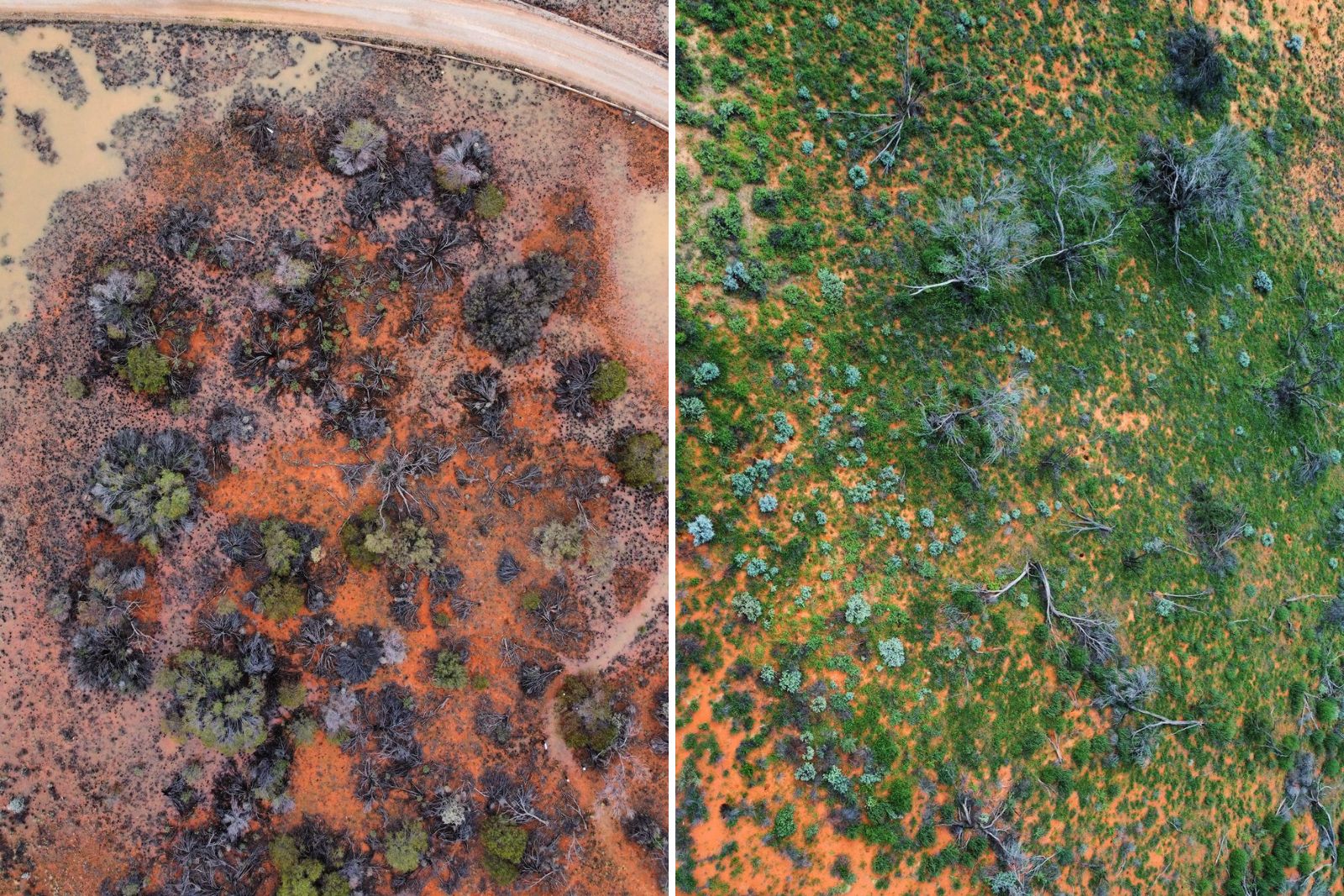
Drone footage during the first lot of rain (left), and the subsequent burst of green a month later (right)Moments like this are a powerful reminder of how responsive arid ecosystems are. Beneath the surface, life is always waiting. It just needs the right conditions to explode into action.
While the desert bursts into life this Easter, our team is out there keeping the fence standing. Behind every boom is the work to keep threats outside the fence and build upon the science to understand how these boom-and-bust cycles shape desert ecosystems. If you’d like to be part of that work, you can donate here.