Three years of kowaris at Arid Recovery
Arid Recovery
06 February 2026
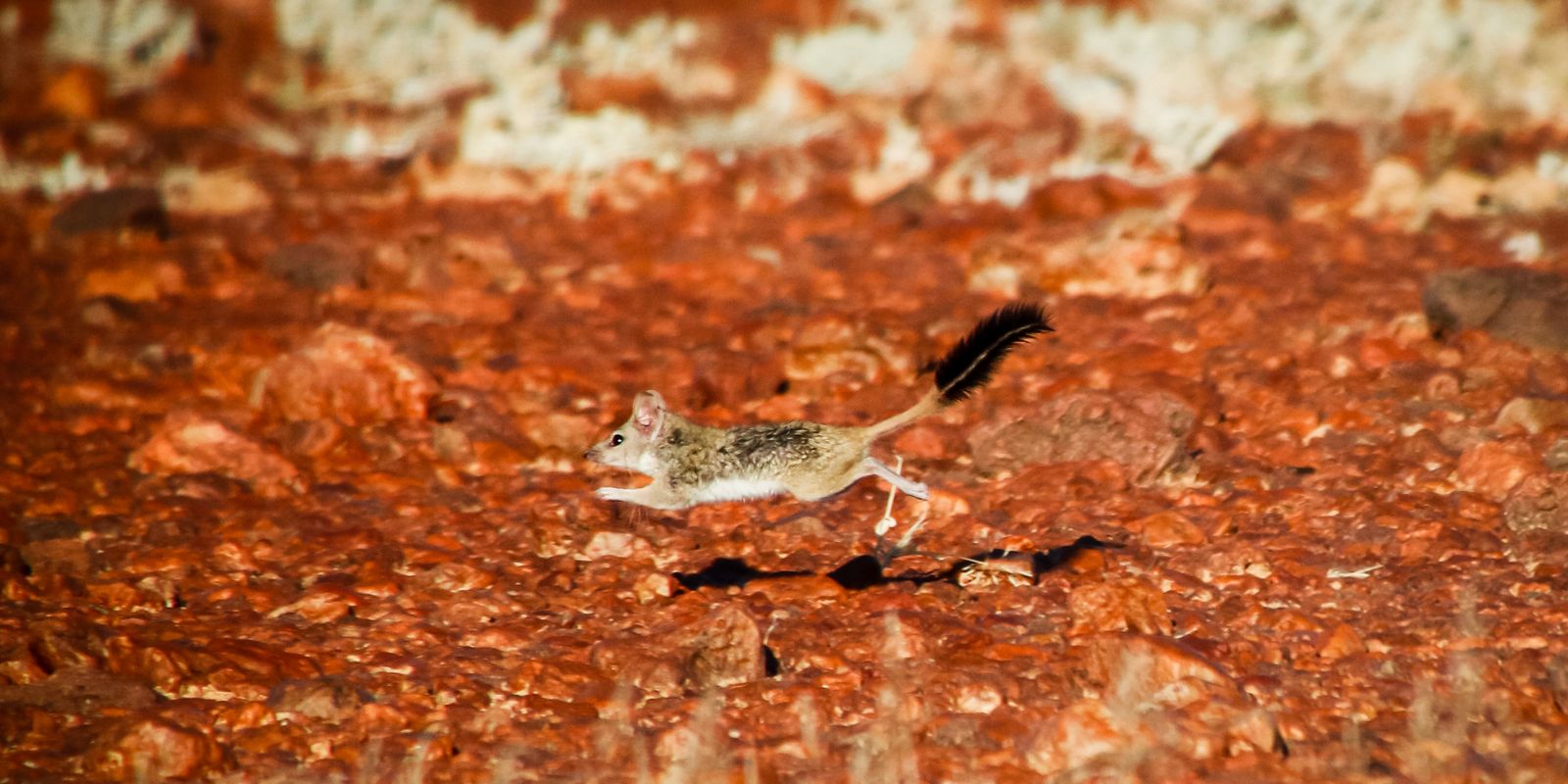
Three years ago, Arid Recovery took a carefully planned step to help secure the future of one of Australia’s most threatened desert predators, the kowari, by establishing an insurance population within the reserve. Today, the signs are encouraging; the population is growing, breeding is occurring, and kowaris are dispersing beyond their original release area.
The kowari is a small but formidable nocturnal marsupial predator, weighing little more than a chocolate bar. Once common across parts of South Australia and Queensland, its range has contracted dramatically. In 2023, the species’ federal conservation status was officially up-listed from Vulnerable to Endangered, reflecting ongoing population declines driven by introduced predators, habitat degradation from livestock and intensification of pastoralism, and climate change. Despite its vulnerability, much about the kowari’s ecology remains unknown, making every secure population critically important.
Could Arid Recovery support kowaris?
Before any animals were moved, extensive planning and research were undertaken. Arid Recovery needed to assess whether the reserve was suitable for a kowari population. With herbivores like burrowing bettongs, omnivores such as bilbies and bandicoots, and top predators like western quolls already present, a mid-sized predator like the kowari fit naturally into the ecosystem.
Although kowaris had not been historically recorded in the immediate region, subfossil evidence from the nearby Flinders Ranges and habitat assessments confirmed that suitable gibber-like landscapes and food resources were available inside the reserve.
Importantly, kowaris were not represented in any fenced safe haven at the time, making this trial particularly significant.
The translocation
In August 2022, twelve kowaris were translocated from Clifton Hills Station to Arid Recovery. The group was deliberately female-biased, with seven females carrying pouch young, to maximise early population growth and genetic diversity.
The release followed a detailed translocation plan, supported by intensive monitoring using VHF tracking, permanent camera arrays and burrow monitoring.
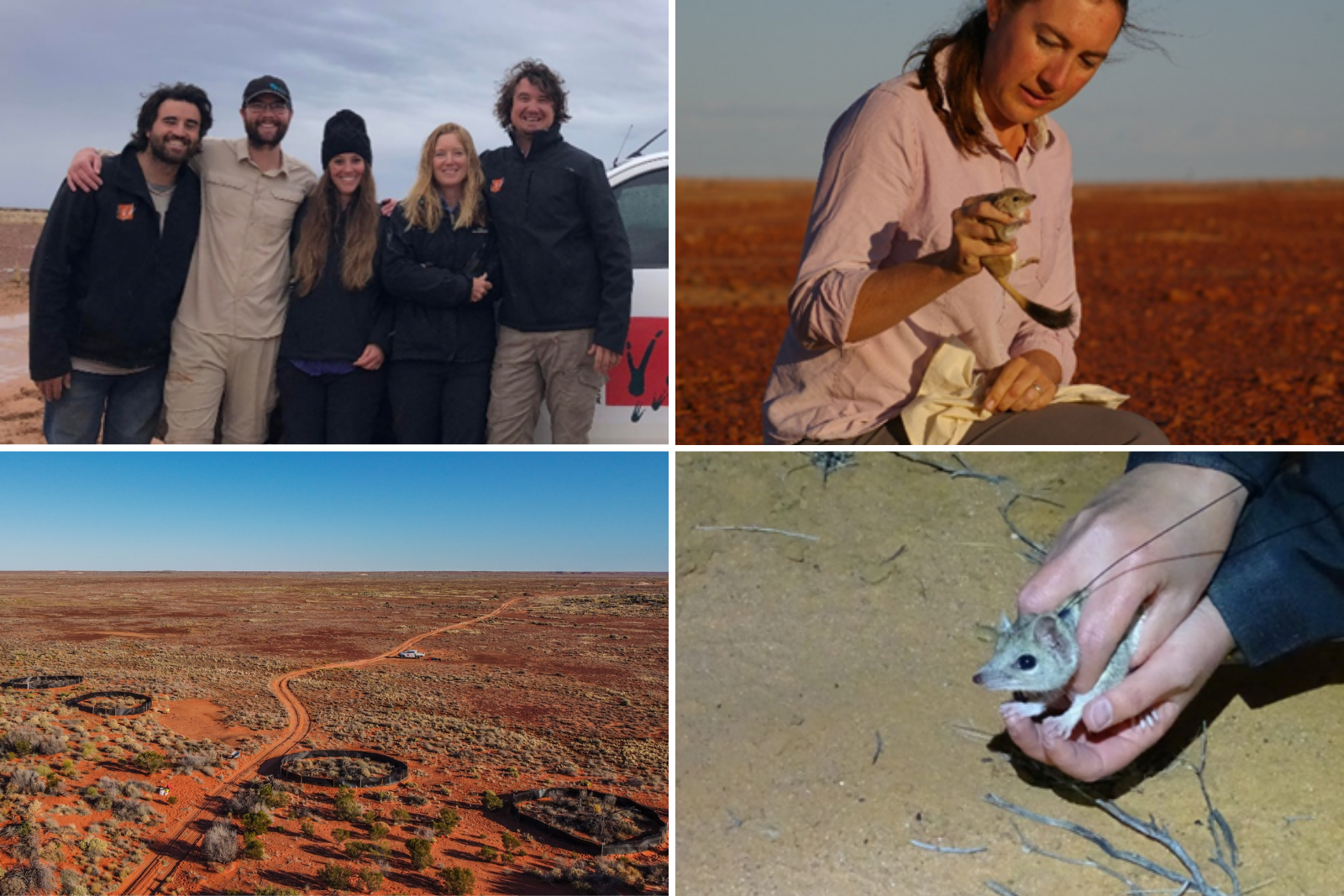
From Cliffton Hills to Arid Recovery (clockwise from top left): Ecologists at Cliftton Hill trapping kowaris reading to take to Arid Recovery, Kath Tuft (former Chief Executive) ready to release a kowari, 12 pens were built to house the kowaris at the reserve, a kowari fitted with a radio collar. Early results exceeded our expectations. Within three months, more than 80% of released females successfully raised young beyond the denning stage (when joeys first leave their mother’s den).
Most individuals remained close to the release area, which was an intended outcome of the soft-release approach. Kowaris were initially held in custom built, individual release pens before being allowed to move freely, giving them time to settle, establish shelter and find food. This reduces the risk of animals dispersing long distances immediately after release, which is a common outcome in wildlife translocations. Importantly, follow-up surveys at the translocation site have found no detectable impact on the source population.
Three years on
Three years after their release, kowaris are now a familiar presence across many parts of the reserve; not just at the original release site, but beyond it. Remote cameras continue to record them month after month, confirming that the population has established, persisted, and begun to expand into paddocks to the north and south of the initial release area.
As the population has grown, camera traps have detected a seasonal rhythm to the kowari’s activity across the reserve. Winter months were quieter, followed by increased activity in spring and summer as young animals begin to disperse. In late 2024, activity surged after significant rainfall, a reminder of how closely life in the arid zone is tied to rain and the boom in prey that follows.
Since 2024, biannual trapping surveys have added another layer to the story, revealing healthy body condition, ongoing breeding and a steadily increasing population. From the original twelve founders, the known population has grown to 35 individuals by 2025, a strong early signal that kowaris are once again finding their place in this landscape.
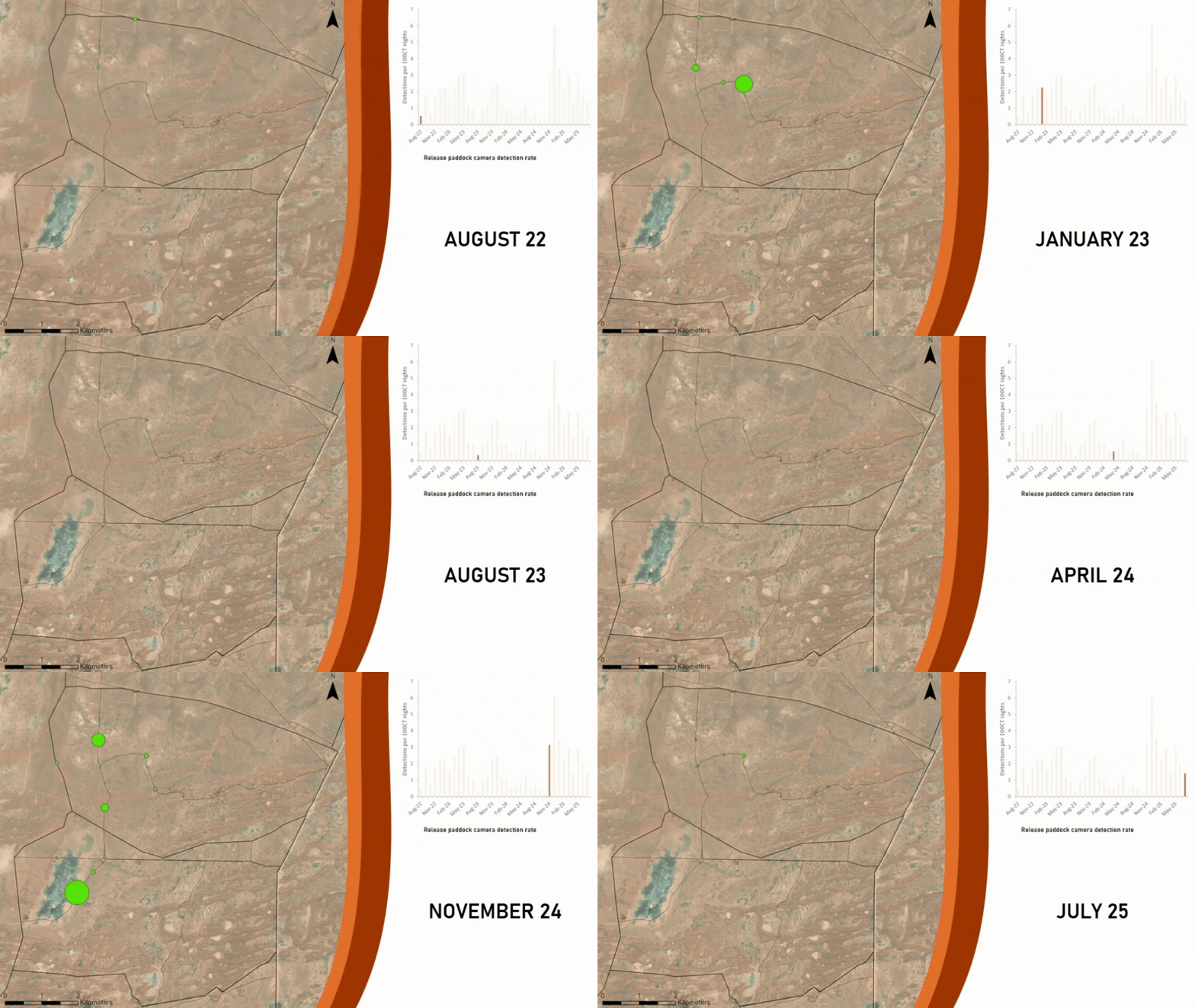
A camera array across the reserve is used to detect kowari activity. The bigger the dot, the more kowaris seen at that location
What’s next?
Arid Recovery currently supports the only protected kowari population in South Australia. Three years after release, kowaris are moving across the reserve, raising young and re-occupying their role as a desert predator. Beyond the fence, intensification of pastoralism and ongoing pressure from cats and foxes continue to threaten wild populations.
Continued monitoring, genetic analyses and research led by PhD candidate Molly Barlow, supported by Team Kowari and Arid Recovery, will track how this population grows and spreads. By comparing kowari survival and dispersal inside the reserve with conditions outside the fence, this work will directly inform how the species can persist in an increasingly pressured landscape.
For kowaris, what happens inside the fence may determine what is possible beyond it.
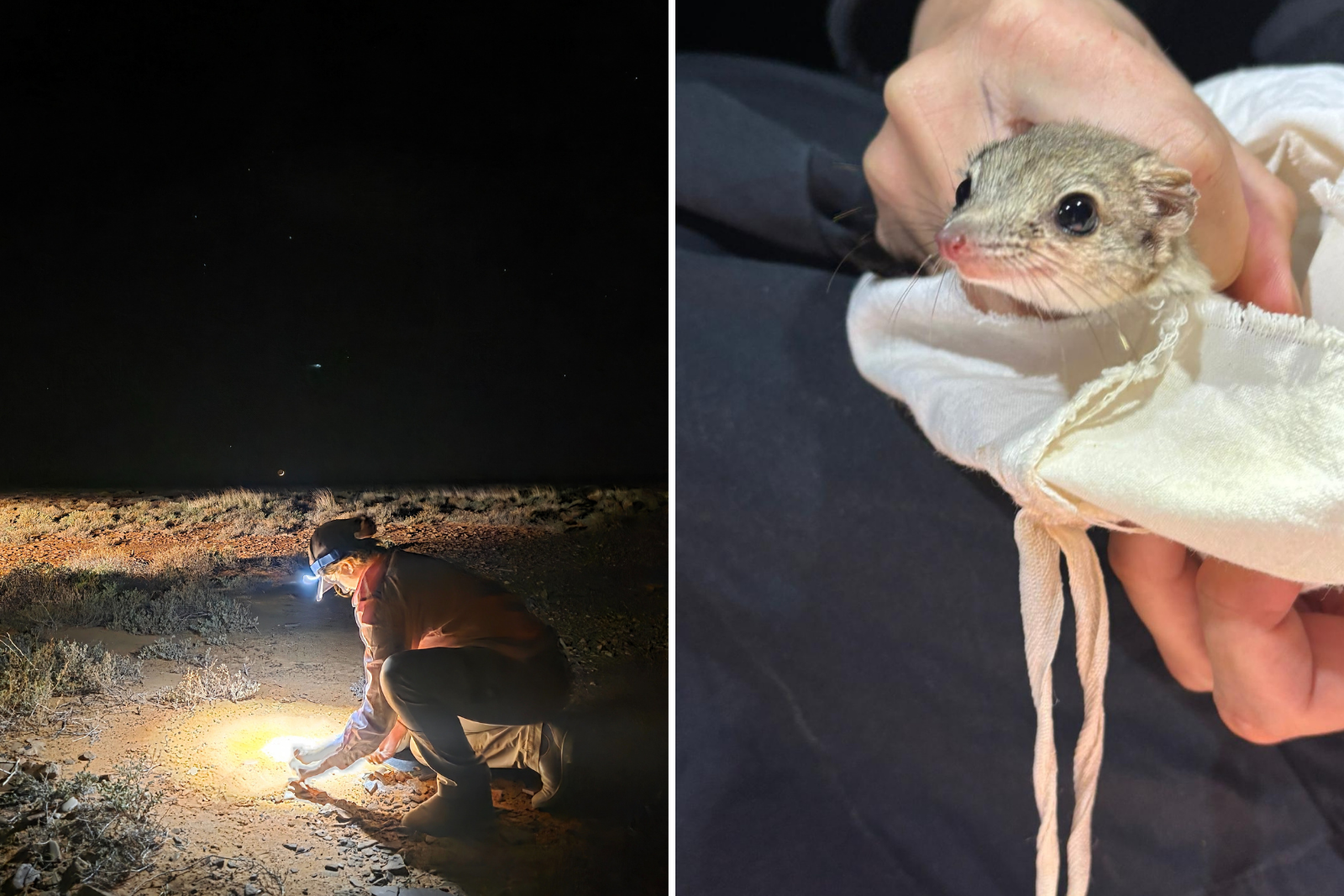
Phd Candidate and Team Kowari President Molly Barlow checks a trap (left), and a kowari about to be released after being processed (right). This article is based on a presentation delivered by Arid Recovery Ecologist Caitlin Rutherford at the Ecological Society of Australia (ESA) 2025 Conference in Adelaide. Co-authors were Molly Barlow, Katherine Tuft, Katherine Moseby, Lauren Young and Genevieve Hayes.
Photo credits: A. Anada, G. Hayes, W. La Marca, J. Ashby.