2026 Kokatha and Arid Recovery Open Day
Arid Recovery
12 October 2026
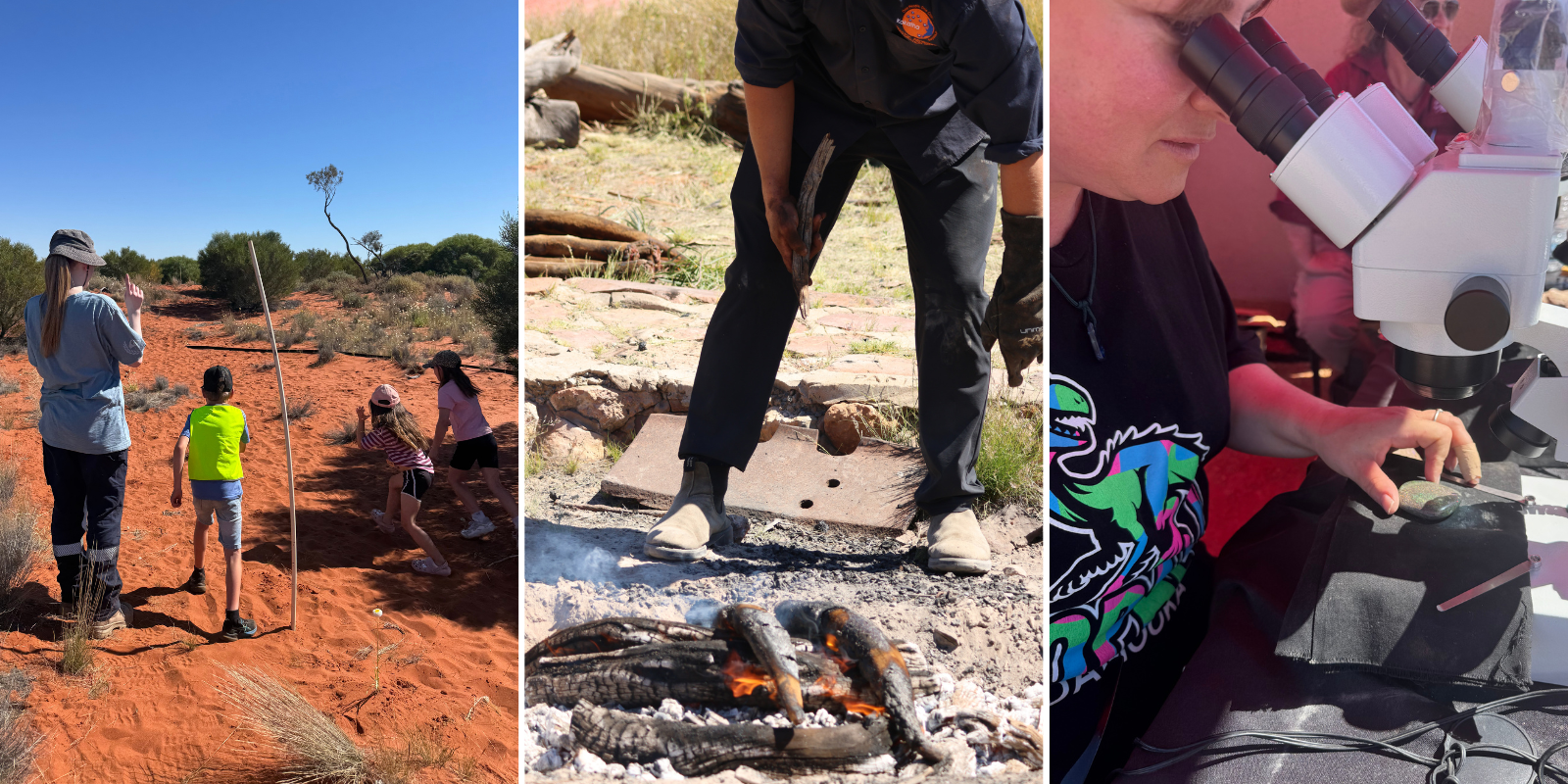
Spring had well and truly arrived by 19 September, bringing warm weather and a spectacular display of wildflowers across the Reserve after a wet winter. Against that colourful backdrop, the Kokatha and Arid Recovery Open Day brought together wildlife, culture, science and community. From hands-on ecology activities and painting to language, live invertebrates, opals, and food around the fire, there was plenty to explore across Arid Recovery’s Field Station.
Becoming an ecologist for the day
This year, children (and more than a few adults) could follow the Bilby Trail around the event, collecting goodies for their showbags as they completed activities at each station.
One of those stops asked a very important question: have you ever wondered what it is like to be an ecologist? Visitors had the chance to remove a toy bettong from a cage trap and learn how to fit an ear tag, mirroring some of the techniques our ecologists use to monitor wildlife at Arid Recovery.
They also measured their bettong’s head and tail, learning what these measurements can tell us about an animal. Head size can give us an indication of age, while bettongs store fat in their tails, making tail width a useful indicator of health. The fatter the tail, the better the condition; and we’re pleased to report there were plenty of happy, healthy bettongs making their way through the processing station.
While the Open Day version was all in good fun, these are the same methods we use to monitor wildlife at Arid Recovery. Cage trapping helps us track changes in abundance, breeding and population trends over time.
Nearby, our new ecologist Stacey had visitors trying their hand at radio tracking. Radio tracking is another important tool used in conservation research, allowing ecologists to follow individual animals and learn how they move through the landscape and which habitats they use.
For the day, visitors were playing the role of an ecologist. For our team, these are the same techniques used to better understand and protect some of Australia’s most threatened arid-zone species.
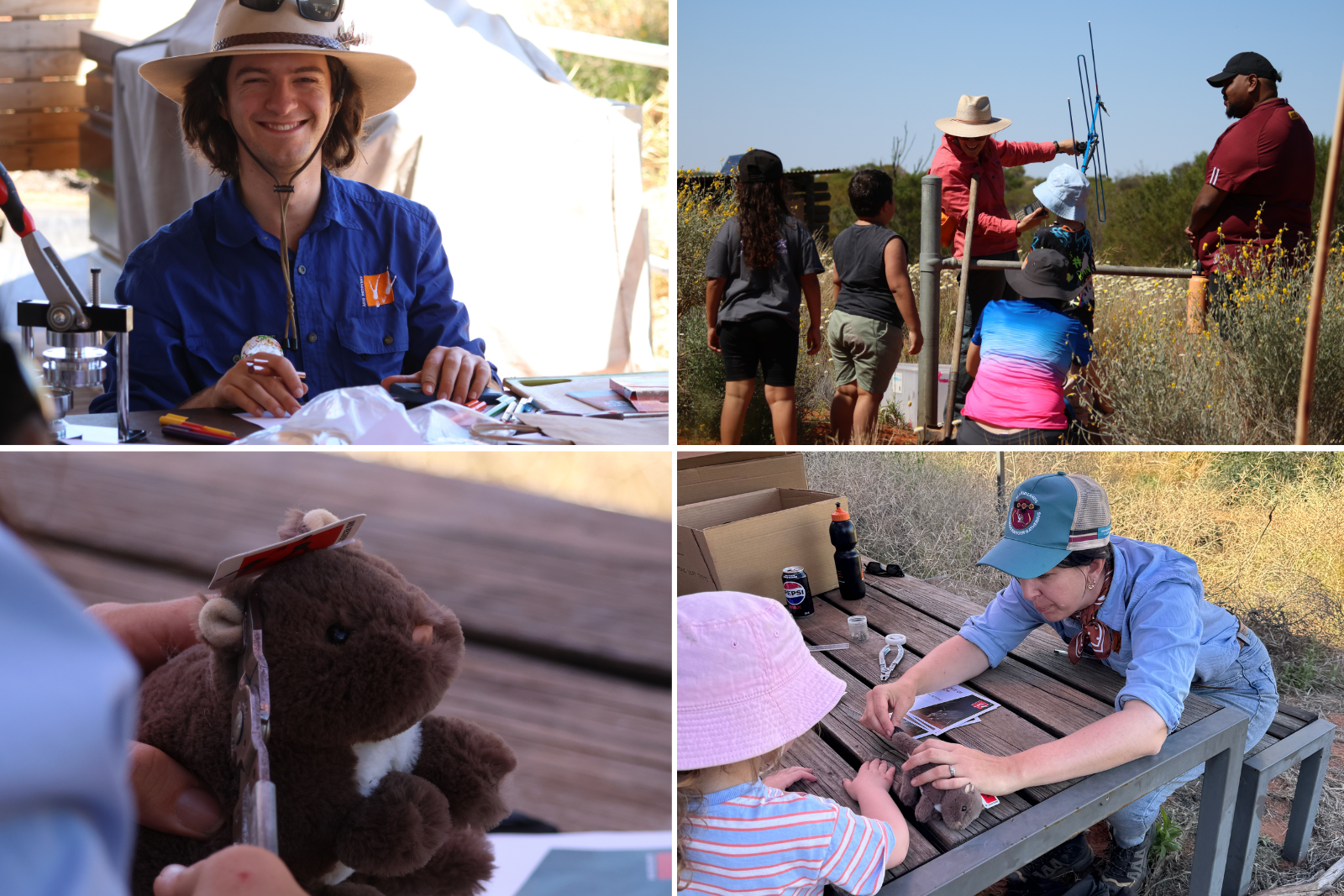 Arid recovery's intern Tom got creative and made badges with children (top left), radio-tracking with Ecologist Stacey (top right), and a burrowing bettong gets 'proccessed' and eartagged (bottom left & right).
Culture, food and language
The Open Day was delivered in partnership with Kokatha, whose connection to this Country stretches back thousands of years.
Around the fire, Kokatha's Community Coordinator Jarred cooked kangaroo tails for visitors to try. Kangaroo tail may have sounded a little adventurous to some at first, but it didn’t take long for people to discover just how tender and succulent it can be.
The deck became an outdoor art studio, with Kokatha Ranger Taelah and Tari and other Kokatha members helping visitors create their own Kokatha-inspired artwork.
People could also learn Kokatha words through activities developed with the University of Adelaide’s Mobile Language Team, providing another way for visitors to connect with Kokatha language and culture.
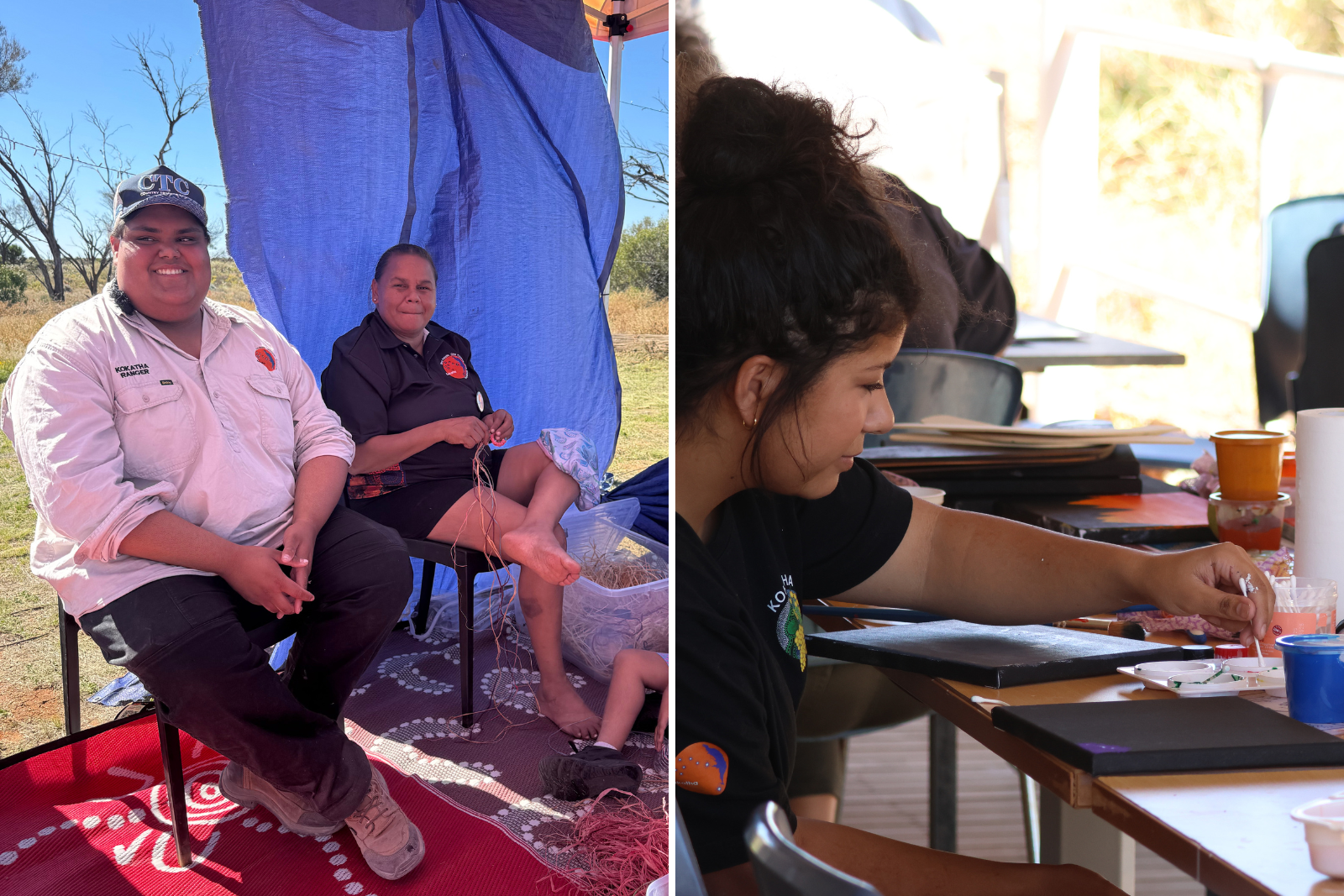 Weaving (left) and dot painting (right) were popular activities during the day
Nature, play and discovery
Inside the Field Station, things got a little smaller, and much leggier. Visitors were able to get up close with giant cockroaches, stick insects, spiders, beetles and other invertebrates with Kris from Bugs 'n' Slugs.
You might expect a room full of spiders and cockroaches to send people running for the door, but not in Roxby Downs. Local kids have always had an impressive enthusiasm for anything covered in fur, feathers, scales or an exoskeleton. The invertebrate displays gave visitors an opportunity to look closely at some of the smaller creatures that are often overlooked, despite playing important roles in desert ecosystems.
And after examining the living creatures, visitors could take a trip much further back in time. The Andamooka Observatory brought along fossils and rock specimens, with microscopes allowing people to explore another side of the region’s natural history.
BHP also joined us for the day, with giveaways, activities and a giant community map asking visitors what places and animals were important to them. Kangaroos and emus came up repeatedly as local favourite animal. The sleepy lizard also made a few appearances, which is fitting since it is a significant Kokatha totem.
Bree from Connections in Nature also created a nature play space for the day, giving children another way to explore, create and connect with the natural environment through hands-on play.
.png "open-day-attractions-(2).png") Kris from Bugs 'n' Slugs ensuring participants get up close and personal with invertebrates (top left), roo tails coming off the fire (top right), Chief Executive Lauren Young and KAC board member Joyleen Thomas (bottom left), Roxby Downs local gather to learn about opals and fossils from Andamooka Obserbatory (bottom right)
Kris from Bugs 'n' Slugs ensuring participants get up close and personal with invertebrates (top left), roo tails coming off the fire (top right), Chief Executive Lauren Young and KAC board member Joyleen Thomas (bottom left), Roxby Downs local gather to learn about opals and fossils from Andamooka Obserbatory (bottom right)
A community effort
Events like this only happen with the support of many hands. It is always a privilege to open the gates and share the work happening at Arid Recovery. Even better is being able to do it alongside Kokatha, bringing together culture, Country, conservation and community in the one place.
A huge thank you goes to everyone who helped make the day possible. We thank Kokatha, BHP, the Andamooka Observatory and the University of Adelaide Mobile Language Team for sharing their time, activities and knowledge, and the SA Arid Lands Landscape Board for supporting the event through its Grassroots Grants program. A huge thank you goes to Rotary for keeping everyone fed throughout the day, cooking the barbecue and helping make the event run smoothly. Thank you also to our wonderful volunteers, Chelsea and Aly, who kept everyone moving with our animal running races (plenty of people now know whether they can outrun a bilby). And to Donna, who kept visitors well fed with her delicious freshly cooked damper.
Most importantly, thank you to everyone from Roxby Downs and the surrounding region who came out, braved the warm weather and spent the day with us.
Photo credits: Kaitlyn Markos